Selenium fights cancer. Fact.
This report shows that increased levels of blood selenium lower cancer risk, and can play a role in your cancer treatment programme.
Selenium is a trace element, nutritionally essential for humans. Selenium deficiency causes serious problems. It is a constituent of more than two dozen selenoproteins that play critical roles in reproduction, thyroid hormone metabolism, DNA synthesis, and protection from oxidative damage and infection (Sundee et al Modern nutrition in Health and Disease 11th Ed. Philadelphia PA Lippincott, Williams and Wilkins 2012:225-37).
In an often mis-quoted meta-review by the Nordic Cochrane Institute in 2011, the conclusions were clear: "Epidemiological studies have suggested an inverse association between selenium status and the risk of colorectal, prostate, lung, bladder, skin, esophageal, and gastric cancer.
The data presented shows that the group with the highest blood selenium levels had a 31 per cent lower cancer risk, and a 45 per cent lowered risk of dying from cancer, when compared to those in the group with the lowest levels (Cochrane Database Syst Rev 2011:CD005195)".
The American FDA published an announcement on its website in early 2009 stating that ’Selenium may reduce the risk of certain cancers’, adding that ’Some scientific evidence suggests consumption of selenium may reduce the risk of certain cancers’.
This is indeed a breakthrough for this natural mineral. The conservative FDA supporting a natural compound for cancer prevention! The research is getting stronger every day.
Research and the different forms of selenium
Selenium biochemistry is complex. It is consumed in many forms and at different absorption levels, being used in combination with many different proteins in the body. Each form has its own unique set of abilities. The three forms of selenium most important in cancer prevention are sodium selenite, L-selenomethionine, and selenium-methyl L-selenocysteine.
Possibly the most active is inorganic sodium selenite which has been shown to kill cancer cells in more than 8 studies (For example, Fu L, Liu Q, Shen L, Wang Y. Proteomic study on sodium selenite-induced apoptosis of human cervical cancer HeLa cells. J Trace Elem Med Biol. 2011 Jul;25(3):130-7; or, Dziaman T, Huzarski T, Gackowski D, et al. Selenium supplementation reduced oxidative DNA damage in adnexectomized BRCA1 mutations carriers. Cancer Epidemiol Biomarkers Prev. 2009 Nov;18(11):2923-8; or, Ma Q, Fang H, Shang W, et al. Superoxide flashes: early mitochondrial signals for oxidative stress-induced apoptosis. J Biol Chem. 2011 Aug 5;286(31):27573-81.).
In particular, it seems capable of generating forms of radical ’oxygen’ molecules that kill off the types of mitochondria that only exist in cancer cells. There is a protein in cancer cells Bcl-2 that stops apoptosis - the cell killing itself. Selenium seems to block this action.
It also increases the activity of the antioxidant enzyme glutathione peroxidase in healthy tissue, so promoting a double action - killing the cancer cells and protecting the healthy ones. It helps repair damaged DNA and enhances the immune system
The above actions all suggest a role as a complementary therapy in your cancer treatment programme.
But selenium is important in prevention too: In early 2009 German scientists from St. Josef’s Hospital in Wiesbaden presented their findings on selenium, concluding that selenium blood levels were significantly lower in men with benign prostate hypertrophy or prostate cancer. (Acta Oncologica)
In another study (Molecular Nutrition and Food Research, 2009) experts suggest selenoproteins have powerful antioxidative and anti-inflammatory effects that could make them important in preventing prostate and colorectal cancers.
In the March 2009 edition of Clinical Cancer Research researchers from Penn State College of Medicine showed that isothiocyanates found in cruciferous vegetables (like cabbage, cauliflower and kale) when combined with selenium supplementation became even more potent in treating melanoma.
’Selenium deficiency is common in cancer patients, including those diagnosed with metastatic cancer’, said lead researcher Professor Gavin Robertson.
Importantly, in the prostate cancer studies and in the melanoma research, it was found that a protein, Akt3, develops and this is driven by oestrogen, There are no drugs to stop it, and Akt3 causes the cancer to develop, according to Robertson. ’Selenium is known to destabilise Akt3’, he adds.
Finally, in 2012 (American Journal of Clinical Nutrition; 2012 Jul;96 (1) 111-22) scientists from the Department of Nutrition at Norwich Medical School studied the effects of selenium in preventing prostate cancer. Their meta-analysis of randomized controlled trials, case-control studies, and prospective cohort studies reviewed studies on blood plasma levels: Twelve studies with a total of 13,254 participants and 5007 cases of prostate cancer were included. The relation between plasma/serum selenium and prostate showed that the risk decreased with increasing plasma/serum selenium up to 170 ng/mL.
So, selenium doesnt just seem to help prevent cancers, it possesses the ability to fight them too.
General observations
Selenium is a mineral we are only just learning about as it is a trace element. It was not even discovered as an essential nutrient until 1979 and only in 1990 was an RDA recommended. It is now known to work with vitamin E and Glutathione Peroxidase to help protect the bodys tissues from free radical damage. Selenium and vitamin E seem to have a magnifying effect on each other. Selenium also appears to be anti-viral and anti-bacterial in its actions.
More flawed research: It is important to note that the vitamin E needs to be naturally sourced with all 8 forms present 4 tocopherols and 4 tocotrienols). One study (the SELECT study in 2009, stated that selenium had no benefit in fighting cancer. Analysis of the results showed (as we are always telling you at CANCERactive), that the problem lay with the use of cheap synthetic alpha-tocopherol vitamin E, whereas in natural vitamin E the tocotrienols are the protectors. Take your selenium with naturally sourced, complete or total vitamin E.
Selenium has two other effects that may well play a role against cancer. Firstly, it protects the body against the increasing problem of toxic metals, e.g. mercury, cadmium and arsenic. This is particularly relevant in the case of mercury, which pollutes our bodies via local coastal fish, fillings in our teeth and vaccines. The FDA in the USA in 2001 identified that 83 of the 100 most common vaccines used mercury as the carrier - by asking nicely they have reduced this to 73!!

Selenium levels affect your hormones

Secondly, selenium levels affect your hormones - in particular, the thyroid hormone, from which it removes the iodine. This has a knock-on effect to all of your hormones. Dr John Millward has been a champion of Selenium for years. For example, he believes that many women turn to HRT when selenium deficiency is actually the cause of their problems. And it is a particular concern of his that this trace element is fast disappearing from our ever depleted soils.
Yet more research
Various studies have looked at the blood selenium levels of people from different parts of the globe and the conclusion is invariably that low levels are linked to higher cancer rates.
In 1984 researchers at the University of Kuopio in Finland looked at 8,000 women and men who were interviewed and blood samples stored. In the following years 128 men developed cancer. When their blood was compared to those without cancer it was found to be deficient in selenium - in fact those with the lowest levels were three times more likely to develop cancer. This was especially true for cancers of the blood and colon.
A second study by universities all over the USA looked at 11,000 people across 5 years. 111 of the participants developed cancer and again their selenium levels were much lower than healthy people tested. In this research the cancers most noted were again those of the gastrointestinal tract, but also prostate cancer. By contrast selenium does not appear to influence breast cancer rates - the Harvard Medical School study on 62,000 nurses was inconclusive.
Males appear to have a slightly greater selenium requirement. It is lost in the semen and concentrates in the testes and seminal ducts.
There was a 52 per cent reduction in total cancer mortality
One of the most important cancer trials was undertaken by the Nutritional Prevention of Cancer Study Group, (Effects of Selenium Supplementation for Cancer Prevention in Patients with Carcinoma of the Skin, Larry Clark et al - JAMA,1996) and utilised a 0.5gm high-selenium brewers yeast tablet providing 200 mcg of selenium per day. 1312 patients participated. This study showed that there was no effect on skin cancers in the group taking selenium, but a 52 per cent reduction in total cancer mortality, a 17 per cent reduction in all cause mortality, a 37 per cent reduction in total cancer incidence, a 46 per cent reduction in lung cancer incidence, a 58 per cent reduction in colon cancer incidence and a 63 per cent reduction in prostate cancer incidence. And this is in a group of patients in the United States where selenium intake from the diet is approximately 2-3 times higher than that in the UK and Europe in general.
Much work has also been done with the population of China where there are both selenium rich areas and selenium deficient areas. Research there suggests that selenium has a 20 per cent positive effect on cancer risk.
In the USA 1993 China study, the group taking vitamin E, beta-carotene and selenium showed more than 30 per cent less cancers. In the French seven year SUVi Max study with 17,000 participants the male group taking vitamins C, E and beta-carotene, plus zinc and selenuium reported 37 per cent less deaths from cancer.
Recommended Daily Levels And Supplementation
The official RDA is around 55 micrograms. It is felt that levels around 200 micrograms are probably beneficial but above that there is concern. At 900 micrograms there is proven toxicity, which manifests itself in dermatitis, hair loss and diseased nails.
Selenium yeast is the form of selenium used in the recent and most encouraging cancer trials, although usually this is not a live yeast. Someone who has a massive yeast overgrowth problem might need to stay away from yeast for a while, but this should not affect everyone.
The inorganic forms of selenium are less bioavailable than organic forms
Selenium yeast provides selenium compounds similar to those found in cereals, so closely resembles a food, which is ideal for a food supplementation (approx. 50% of the selenium compounds found in yeast comprise of selenomethionine). Seleno-methionine is another organic form and, whilst inorganic forms such as selenite and selenate are not naturally found in foods, they have been found to produce higher levels of glutathione peroxidase quicker. This is only one selenium dependant enzyme in the body and there are 35 or more selenoproteins that have been identified to date which all rely on selenium for their function. Bioavailability studies have shown that the inorganic forms of selenium are less bioavailable than organic forms.
Eating your selenium
Try Brazil nuts, wholemeal bread, sunflower and pumpkin seeds, free-range eggs, skinless chicken breast, tuna fish, onions, wheat germ, tomatoes and broccoli. It is important to consume a spectrum of selenium-containing foods.
NB: The chemotherapy drug Cisplatin can reduce selenium levels in the body. Several studies have indicated that selenium may reduce the toxicity of cisplatin - but more work is needed.

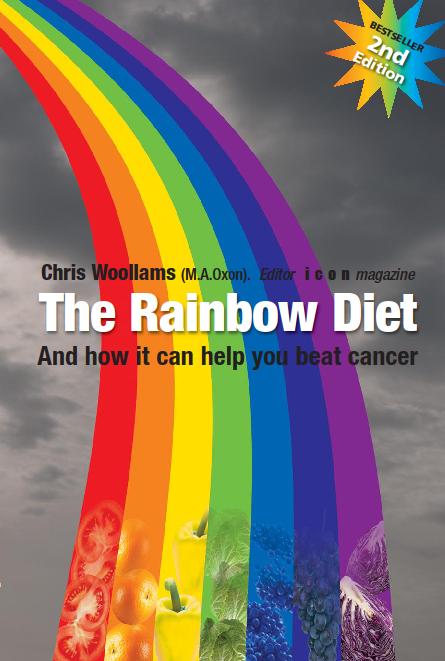 At last - the definitive, research-based book on how to build a diet to help beat cancer. Click here to read about it.
Please be clear: At CANCERactive we do not consider the above compound to be a cure for cancer, despite what the research says or experts doing the research may claim. The above, is an article on the compound from published research and expert opinion in the public domain. At CANCERactive we do not believe that any single compound (drug, vitamin, whatever) is a cure for cancer. We believe that people can significantly increase their personal odds of survival by building an Integrated Programme of treatments. Equally, cancer prevention is best practiced through a width of measures.