
Total vitamin E, containing all 4 tocopherols and all 4 tocotrienols, has significant health benefits and significant anti-cancer benefits and is far superior to the synthetic alpha-tocopherol commonly on sale, which may even increase the risk of cancer.
Natural Vitamin E - The Super Vitamin
Vitamin E is a ’super vitamin’. It boosts the immune system and can help fight cancer. In its natural form.
Unfortunately, the vast majority of so-called vitamin E supplements sold on the High Street are incomplete, containing just one of the eight naturally occurring forms that make this vitamin so potent. Worse, all to often this single vitamin E type (alpha-tocopherol) is synthetic. That’s why they are cheap - synthetic and incomplete!
Critics jump to select 50 of the 800 or more studies that conveniently show that these ’High Street supplements’ do little good, and may even cause harm. In those cases, the studies are almost certainly correct. It is hardly surprising that the cheap, incomplete synthetic stuff doesn’t work. Frankly it is disgraceful even allowing it to be called vitamin E. If you bought a Thai synthetic copy of a Gucci leather handbag, would you be surprised if the handle fell off?
One study with selenium in 2009, the SELECT study concluded that vitamin E was not preventing cancer at all. When the research was re-analysed, the scientists found that synthetic alpha-tocopherol was the selected vitamin E and that this could displace gamma-tocopherol from cells, increasing cancer risk.
However vitamin E, in its full 8 variant natural state is a 'super compound'. Ignore it at your peril.
The MD Anderson Cancer Center in Texas reviewed the natural version of vitamin E and shown that a high intake of natural vitamin E reduces lung cancer risk by 55 per cent (Cancer Watch), while in 2012 researchers at the National Cancer Institute in America showed that it was one of the bioactive natural compounds that could stop cancer tumour re-growth.
Natural sources of vitamin E and 8 variants!
Vitamin E is a fat soluble vitamin derived from a wide variety of sources including palm oil and other vegetable oils, whole grains, eggs, wheat germ and green vegetables.
And here the confusion starts - a confusion that regularly grips eminent cancer bodies and so-called expert professors! Vitamin E is not a single vitamin, but a family of 8 variants, 4 tocopherols, and 4 tocotrienols, each with very different properties. A tocotrienol derived from palm oil has very different biochemical effects to a tocopherol from wheat germ. Does a Toyota pick-up truck have the same benefits as a Lexus, even though they are both from the same company?
Very few ’cancer experts’ seem to understand this. In fact one top cancer center talks about all the foods that vitamin E is found in and then carries on talking about synthetic vitamin E as if it was the same thing!
There are four (alpha, beta, gamma and delta) compounds in each of the following two subgroups:
The tocopherols - the synthetic alpha version is the only one that the EU has officially approved - and this is the version most commonly found in the high street throughout Europe.
The tocotrienols not on the European approved list and were thought to be actively "weaker". With increasing research, this group now seems to have the more important benefits.
Synthetic alpha-tocopherol - cause for concern?
Historically the majority of the research was conducted using alpha tocopherol. There are probably more than 800 studies! And many of those studies show health, and even anti-cancer benefits. However, three meta-studies (where researchers claim to have analysed all the available research and drawn an overall conclusion) have concluded that Vitamin E has little effect and may even increase cancer risk by up to 10 per cent).
Notwithstanding the fact that the meta-study researchers usually just selected 14 or so of the 800+ studies (in one case, using only studies where someone had died!), at CANCERactive we are not surprised that studies using synthetic alpha-tocopherol have shown limited effect and even some negatives.
A 2017 meta analysis(1) however confirmed all of the above to be correct - alpha-tocopherol is all but useless which the other 7 forms have significant benefits.
If you are already thinking of buying Vitamin E you might like to CLICK HERE to see what the Natural Selection has in store.
Tocotrienol Vitamin E to the fore
Nowadays, more and more work is being done with tocotrienols, and in the natural form. For example from icon cancer watch: Two forms of Tocotrienol vitamin E (alpha and beta) have been shown in Japanese research to directly inhibit DNA polymerase (the enzyme that causes rapid division in cancer cells) and also to slow down blood vessel formation to a tumour. In a number of other research studies the most potent form in fact seems to be natural gamma tocotrienol.
Unfortunately, synthetic alpha tocopherol has been found to inhibit both gamma tocotrienol and tocopherol.
If you are thinking of buying Vitamin E, you might like to look at the Natural Selection Product of Choice Total Vitamin E from natural sources with all eight essential forms in it. You can do this by clicking here.
Breast cancer patients may like to know that there are clinical trials showing that vitamin E even enhances the effect of Tamoxifen - if you take vitamin E you need 25 per cent less Tamoxifen (and since the latter has been linked to several risk factors like strokes and womb cancer, that’s a useful thing to know!). We’d like to tell you to ask your Doctor but he probably won’t know about this research. (Unless he reads icon!!)
History
In 1922 researchers stumbled on the fact that rats fed wheatgerm and lettuce were restored to full reproductive health.

Rats fed wheatgerm and lettuce were restored to full
reproductive health

Factor X was dubbed the fertility vitamin and in 1936 it was renamed vitamin E.
Benfits of vitamin E
Natural Vitamin E is a super vitamin. The ultimate free radical buster.
It helps prevent cell membranes, especially brain cells, blood cells and immune cells from oxidative attack.
It literally stops the fat in them turning rancid. It is especially protective of both the B- and T- lymphocytes in the immune system.
It works as an antioxidant, particularly in the lungs, protecting against toxic attack and air pollution.
It protects against free radical damage throughout the body. Selenium helps its action, whilst inorganic iron destroys its action.
It prevents the oxidative destruction of other vitamins such as beta-carotene, C and A.
Total vitamin E has certain, and very clear, anti-cancer benefits
It works synergistically with vitamin C and vitamin A.
And it has certain, and very clear, anti-cancer benefits. It appears, for example, to inhibit the growth of cancer cells at the local level.
Vitamin E and Cancer - A Summary
Research from the Vanderbilt-Ingram Cancer Center in Nashville, (August 2012 Journal of the National Cancer Institute), looked at data from 133,000 participants in the Shanghai Women’s Health Study and the Shanghai Men’s Health Study who consumed vitamin E in food or supplements, or both. The researchers found that the vitamin, in either form, lowered risk of liver cancer in the high consumption group by 40 per cent more than those with the lowest intake.
Stomach cancer - Italian research has linked low vitamin E levels with increased risk of stomach cancer.
Cancers of mouth and throat - A study in 1992 by the NCI showed that regular usage of vitamin E cut these cancers by 50 per cent.
Lung cancer - A study in 1990 at Louisiana University Medical Centre showed people with lung cancer had significantly lower blood levels of vitamin E.
This was confirmed by a study in 1991 at Johns Hopkins School USA.
Again in 1991, a Finnish study amongst non-smoking men showed that men with the lowest blood levels of vitamin E were three times more likely to develop the cancer.
Breast cancer - In the Spring of 2002, Life Extension magazine published an article in which it reviewed 12 different studies on vitamin E.
Women with breast cancer have lower blood serum
levels of Vitamin E
The conclusion was that vitamin E (tocotrienols - but not tocopherols) reduced risk by as much as 60 per cent. Our own St Bartholomew’s Hospital has also shown that women with breast cancer have lower blood serum levels of vitamin E (1992).
Cervical cancer - Albert Einstein College of Medicine, New York showed women with the most severe lesions had lowest levels of blood serum vitamin E. This was confirmed in Seattle where the highest blood serum levels reduced risk by two thirds.
Prostate cancer - The Journal of the National Cancer Institute (1998) showed that a Finnish study, whilst studying the vitamin E effects on smokers, spotted that among over 29,000 males, the vitamin E study group had a 41 per cent decrease in prostate cancer over the placebo group. The protected group took 50 mgs of alpha-tocopherol per day for 5-8 years. In a USA test amongst people deficient in vitamin E, a 50 mgs daily supplement reduced prostate cancer cancer by 20 per cent.
All cancers - Researchers at Tufts University in Boston (1990) showed that in people over 60 years of age, a daily dose of 800 liis of vitamin E significantly improved the immune system function.
Natural Sources of vitamin E
Both plant and animal tissues contain vitamin E; however since it is fat-soluble, the best animal sources tend to come with high fat!
Tocotrienol vitamin E is found in unrefined palm oil and corn oil-whilst vitamin E is generally found in sunflower seeds, almonds, soya and wheatgerm (best sources) plus green leafy vegetables, liver, egg yolk, fresh oily fish, nuts in general, pumpkin and sesame seeds, sweet potato, butter and whole grains.
Enemies - what damages vitamin E levels in your body?
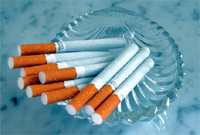
Smoking, inorganic iron, cholesterol reducing drugs like statins, refined mineral oils and polyunsaturated fatty acids will all reduce levels of vitamin E in the blood serum. Women who are breast feeding or pregnant and people with low fat diets almost certainly need supplementation. Overcooking, particularly of oils, destroys vitamin E content.
Vitamin E - Are You Getting Enough?
Major Research studies frequently use levels of up to 200 mgs (approx 280 lUs). Just to confuse you, International Units (IUs) is the measurement most commonly found on bottles of pills.
This compares to the Government Recommended Daily Allowance (RDA) of just 10 mgs. But that is the RDA - a lower figure then something called the Optimum Daily Allowance, as defined by scientists. Clearly our governments havent talked to our scientists, as the Optimum Daily Allowance can be up to 20 times higher than the Recommended Daily Allowance.
Indeed whilst 100 to 400 IUs is a favoured level for dietary supplementation, short term supplementation using 1000 IUs is not uncommon.
An even bigger problem is that it is very hard to eat an Optimal Daily Allowance. Elsewhere on this site we have articles on how badly our soils have been depleted (losses of key vitamins and minerals can exceed 70 per cent over the last 50 years) and how organic foods have been proven to leave mass-market produce in the shade when measuring health compounds such as vitamins. Vitamin E is one of the worse to suffer
Even taking vitamin E rich foods and eating large volumes of them throughout the day only takes you to about 25-40 IUs. Up to 60 per cent of vitamin E is also expelled daily in the faeces, further worsening the issue.
So there is a very strong argument to supplement daily and with all 8 forms, using as natural form as possible.
Up to 60 per cent of vitamin E is also expelled daily in the faeces
Summary of vitamin E and health
There are probably over a thousand expert studies on all forms of vitamin E and many indicate that Vitamin E and increasingly tocotrienol vitamin E is essential in the fight against cancer. At CANCERactive we are very concerned that the widely available form of vitamin E is synthetic alpha-tocopherol. Alpha-tocopherol offers only a few of the range of benefits increasingly seen for the 8 vitamin Es. And the synthetic form may be even more limited and even cause harm. We always take the view that nothing beats eating the fresh, whole, organic foods. If you cannot do that,
take a naturally sourced supplement - one that is complete and has all 8 variants in it especially as it is becoming very hard to eat enough good quality vitamin E in our daily diets.

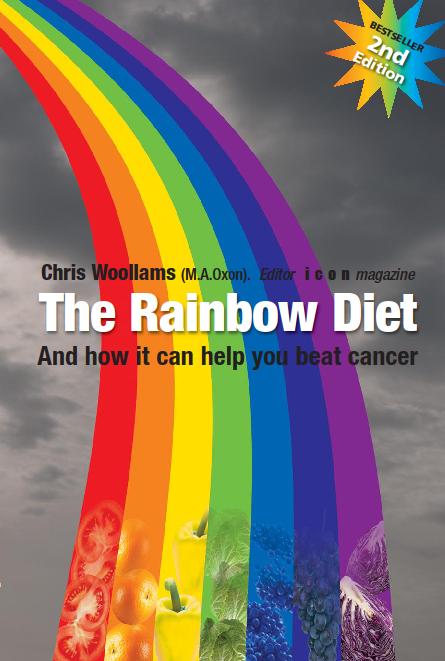
At Last - the definitive, research based book on how to build a diet to help beat cancer.
Click here to read about it.

References
1. https://www.canceractive.com/article/other-forms%20of%20vitamin%20e%20more%20effective%20than%20alphatocopherol
If you are already thinking of buying Vitamin E CLICK HERE to see what the Natural Selection has in store.
Please be clear: At CANCERactive we do not consider the above compound to be a cure for cancer, despite what the research says or experts doing the research may claim. The above, is an article on the compound from published research and expert opinion in the public domain. At CANCERactive we do not believe that any single compound (drug, vitamin, whatever) is a cure for cancer. We believe that people can significantly increase their personal odds of survival by building an Integrated Programme of treatments. Equally, cancer prevention is best practiced through a width of measures.