Indole 3 carbinol, or I3C, is produced by mastication from glucosinolate, found in high levels in broccoli, kale, cabbage, Brussels sprouts and other cruciferous vegetables, further breaking down in the gut into several active compounds such as diindolylmethane, or DIM, ICZ, NI3C and IAN; Indole 3 carbinol has mounting evidence against environmental toxins, radiation damage, HPV, and colon, breast and prostate cancers.
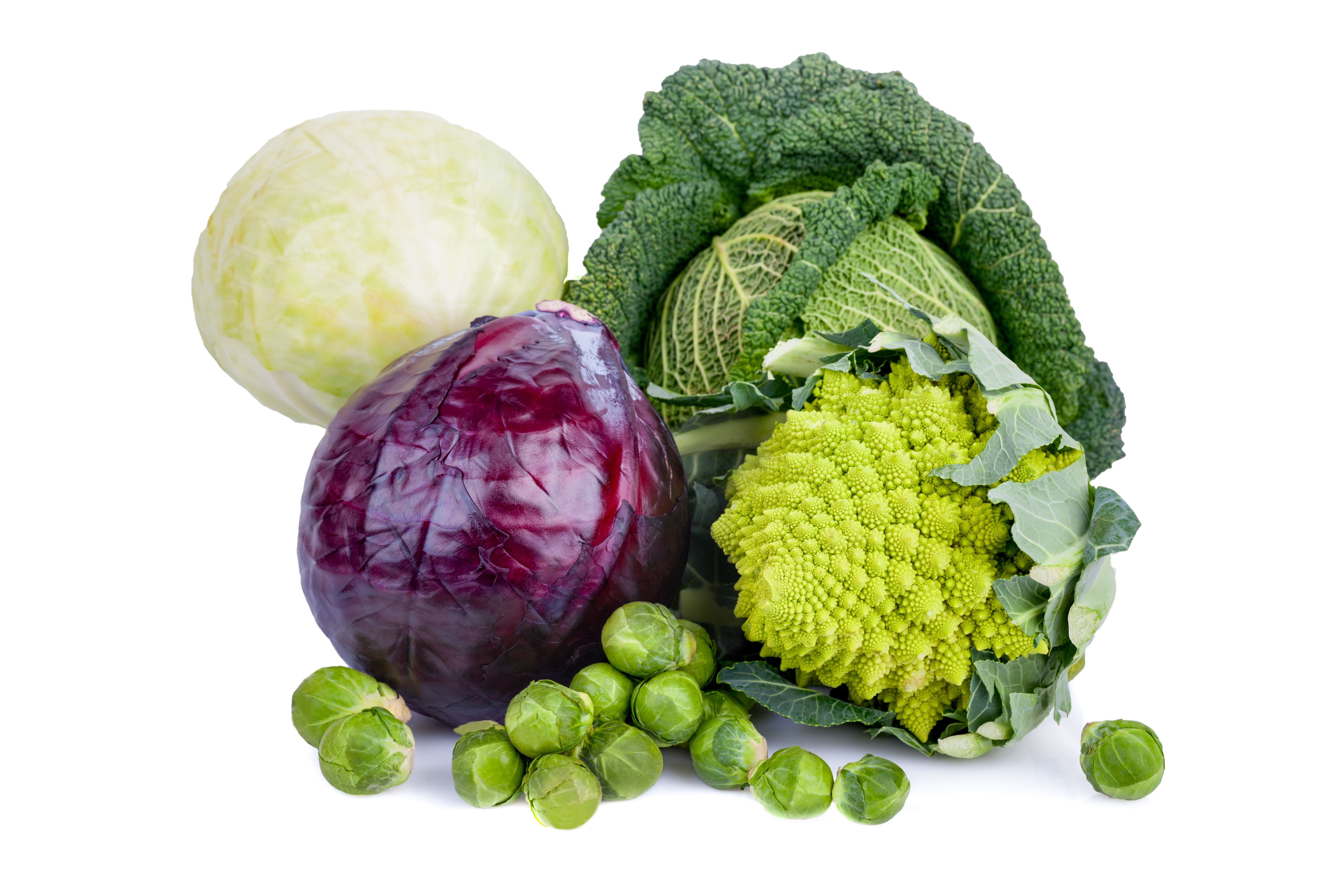
Cruciferous vegetables
There is considerable evidence from epidemiology studies, that populations with a diet rich in cruciferous vegetables such as broccoli, kale, cabbage, bok choi, collards, mustard greens, Brussels sprouts, cauliflower and even turnip, have less heart disease and cancer. This is because these vegetables contain two important groups of compounds:
* sulphur-rich glucosinolates, such as sulphoraphanes, which can be hydrolised in the human gut into isothiocyanates. There is convincing evidence that these compounds can protect cells from oxygenation imbalance and free radicals that lead to inflammation and chronic illness.
* indoles - antioxidants, known to lower inflammation, neutralise free radicals and detoxify the body.
There is also convincing evidence that both sulforaphanes and indole 3 carbinol have significant anti-cancer benefits.
For example, Sloane Kettering in New York comment that diets high in these vegetables are known to slow cancer growth and they have argued for the use of I3C in prevention. A study with mice and prostate cancer shows that I3C has significant inhibitor effects on prostate cancer both in vitro and in vivo (2).
Indole 3 carinol and its breakdown products
Upon cutting, masticating or lightly cooking Indole 3 glucosinolate (I3G), or glucosiolate glucobrassicin an enzyme (called myrosinase) is released in the vegetables and this converts indole 3 glucosinolate to indole 3 carbinol.
In turn, I3C is converted in the gut to a number of breakdown products such as diindolylmethane, or DIM, ICZ, NI3C and IAN. These breakdown products show a number of health activities. For example, ICZ blocks a receptor on cells preventing attack from dangerous chemical toxins; IAN seems to have potential with stomach cancer. However there is conflicting evidence; for example, on its own DIM may increase the rate of oestrogen-driven breast cancer(1) but with I£C the opposite is true.
Like many such natural products it seems important to consume the whole food or take the whole supplement. This is because the breakdown products seem to react with each other and the whole is greater than the sum of the parts. According to Life-Extension some of the confusion over the merits of I3C and DIM occurs because of a Doctor Michael Zeligs who owns a patent on an absorbable form of DIM and who promoted it to the detriment of I3C. We won't get involved in the arguments. Our view is that you should take the whole thing - I3C - as near as possible to the whole food. We know people who have used broccoli juices, and broccoli soups and delayed the need for prostate cancer treatment at Addenbrook's Hospital, Cambridge under Professor Robert Thomas.
As if to prove our point, there is a quality research study showing that DIM can interfere with Tamoxifen. .
1. Indole 3 carbinol - neutralising free radicals, toxins, dioxins and HPV:
Both I3C and DIM are antioxidants neutralising free-radicals. There is research on I3C reversing environmental damage and showing I3C can denature dangerous chemicals called dioxins and prevent them from causing DNA damage.
Research has also shown that I3C can inhibit free radicals which cause the oxidation of fats, for example, in the oxidation of low-density lipoprotein. There is research on indole 3 carbinol and the lowering of cardiovascular, diabetes and obesity risk.
A breakdown product of I3C in the body has been shown to inhibit smooth muscle proliferation and therefore inhibits some heart and artery wall problems.
Sloane Kettering say on their Website that I3C is known to stimulate detoxifying enzymes in the gut and liver.
2. Indole 3 carbinol and cancer
The first recorded use of the bioactive natural compounds in cruciferous vegetables was the recommendation of Cato the Elder, a Roman Statesman around 200 BC, who wrote that, If a cancerous ulcer appears on the breast, apply a crushed cabbage leaf and it will make it well.
Between 1990 and the current time, there have been over 160 peer-reviewed scientific studies on indole 3 carbinol with cancers such as breast cancer, prostate cancer, colorectal cancer, cervical cancer and even respiratory tract cancers.
For example, in one (albeit small) double blind study on women with cervical cancer, supplementation of 200 mg to 400 mg of I3C reversed the early stages of cancer in 8 of the 17 women. Although I3C is potent stuff, the problem is that to get these concentrations from the raw vegetables you would need to be eating two pounds a day of cabbage or broccoli.
Go to: Melatonin - natural defence for breast cancer
Much of the current research data for indole 3 carbinol is linked to the prevention and treatment of hormonally-driven cancers, like prostate and breast cancer. Indole 3 carbinol can modify oestrogen receptor sites preventing the binding of aggressive oestradiol, in much the same way Tamoxifen does.
In 2004/5 the Pharmaceutical company, Hoechst, was so impressed with the health benefits of indole compounds, it tried to patent a number of close relatives and synthetic versions of Indole 3 carbinol (I3C). Hoechst claimed that eventually these new compounds (Indole drugs) will be used to treat all manner of illnesses from arthritis to MS to cancer and, in time, even replace Tamoxifen with a far better alternative.
By 2016, one of the CANCERactive breast cancer patients - aged 42, ER+ve, had her lumpectomy and was actually prescribed I3C rather than Tamoxifen by her top American Hospital.
While there is research on its ability to denature aggressive oestradiol, I3C and DIM can both affect the non-oestrogenic p27 pathways. There is also an increasing amount of research on Indole 3 carbinol and triple negative breast cancer.
There is research showing that animals fed diets high in I3C from cruciferous vegetables had healthier guts, less inflammation and less colon cancer(3).
According to research covered in Cancer Watch, Indole 3 carbinol has effects in cervical cancer and can inhibit HPV virus preventing cervical cancer, restrict carcinogenic aflatoxins and prevent them causing certain cancers.
2. Anti-cancer action involving anti-oestrogen activity
I3C inhibits and reverses oestrogen-driven cancers, where aggressive oestradiol binds to cellular receptor sites causing havoc inside the cells.
a) by denaturing the aggressive form of oestrogen (oestradiol) to a weaker form.
b) by regulating a binding protein and modifying oestrogen receptor sites on cell membranes so that oestradiol cannot bind to them and thus cause havoc inside the cell.
This is applicable in male and female cancers such as breast and prostate. You can eat the cruciferous vegetables in juices (Professor Robert Thomas of Addenbrook's Hosital Cambridge, talks of men with prostate cancer making broccoli juices and soups, reducing PSA levels and delaying the need for prostate surgery by four years.) You need to juice at least 2 lbs of broccoli or other cruciferous vegetables.
3. Anti-cancer action not involving oestrogen
a) DIM, in particular, has been shown to restore the p21 gene activity preventing synthesis of DNA for new cancer cells. It thus stops cancers forming or growing.
b) It has also been shown to decrease HIF-1 alpha and stop tumours forming a blood supply (May, 2008, Biochemical Pharmacology Journal)
c) Orally taken supplements of I3C can cause destruction of the Cdc25A molecule, which is responsible for the rapid cell division in cancers such as breast, prostate, colorectal, oesophageal, liver and lymphoma (Ohio State Medical School, Cancer Watch, 2010)
Scientists at the Florida A&M University and Dr Stephen Safe from Texas A&M University have actually gone on record in one study saying they believe DIM is the effective treatment for triple negative breast cancer (TNBC), they are so confident in their research. (Triple-negative breast cancer does not involve oestrogen, progesterone or HER-2).
From this short summary it is easy to see why pharmaceutical companies are so excited.
4. Indole 3 Carbinol and Tamoxifen
Interestingly for a compound that is supposed to be the new version of Tamoxifen, the question arises 'Do they conflict'. No conflict is mentioned on the Sloane Kettering Website in its pages on natural products. One study is very clear that they enhance the activity of each other: I3C is known to arrest breast cancer cell lines independent from any anti-oestrogen signalling activity. According to the study, tamoxifen and I3C co-operate to arrest the cell lines more effectively than either agent alone. Indeed there seemed to be three lines of benefit and the recommendation was that the wo were taken in combination. As we said above, there does however seem to be conflict between the component DIM on its own with Tamoxifen.
****************
Summary - the benefits of Indole 3 carbinol in cancer
Indole 3 carbinol seems to act in five ways:
• By converting highly active oestrogen forms, and their by-products, to much safer compounds
• By partially blocking oestrogen receptor sites on cell membranes.
• By returning alpha and beta receptor site expression to normal levels
• By blocking other cancer-enhancing receptor sites
• By directly killing cancer cells.
Indole 3 carbinol as a rival to Tamoxifen
Without getting too complicated, forms of oestrogen such as the molecules 16 alpha-hydroxyoestrone and 4-hydroxyoestrone are known carcinogens and have been shown at work in a number of cancers such as breast and prostate; however, the 2-hydroxy form is actually protective. And I3C helps raise the level of 2 whilst decreasing 16 and 4.
To put this in layman’s terms, oestrogen is a family of hormones. One, 16 alpha - by the common name of oestradiol - is known to attach to cellular receptor sites and cause havoc inside the cell (lowering oxygen levels, increasing sodium levels, and prompting a grow signal). In 1991 Researchers from the Institute for Hormone Research in New York showed that I3C helps convert it to a far less aggressive form, 2OHE, commonly called oestrone, which has much weaker cellular effects and effectively blocks the oestradiol 16 form from attaching to cellular receptor sites and passing harm messages to the inside of the cell. In one study, I3C was given to 25 women for two months. Levels of 16 AH oestradiol declined, while levels of 2OHE oestrone increased. At the same time levels of a metabolite directly associated with both breast and endometrial cancer fell.
Now, a lot is known about these cellular oestrogen receptor sites, but we do not know completely about the message transfer systems into the cell. We do know that Tamoxifen aims to sit on these same receptor sites and thus block any similar action by oestradiol. However we do not know fully the action of Tamoxifen or how/whether it transfers messages. And we know it has some less desirable side effects. For this reason some US experts dub I3C (whose simple action mechanism in converting aggressive oestrogen to the safer variety is quite clear), the ’Safer, Natural, Tamoxifen’.
Further UCLA research shows that I3C inhibits the growth of oestrogen receptor-positive breast cancer cells by 90 per cent whilst Tamoxifen only scored 60 per cent. The added benefit is that in oestrogen receptor-negative cells, I3C stopped the growth of new cells by almost 50 per cent whilst, of course, Tamoxifen had no significant effect.
But this is only a part of I3C’s action. A by-product of the metabolism of oestradiol is also a carcinogen and can also send grow signals, having been linked to prostate, breast and endometrial cancers. This by-product is especially produced by some toxins and chemicals, including some oestrogen mimics. Strang Cancer Research Institute have shown that I3C reduces the levels of these metabolites, changing them back to safer 2OHE. Again Tamoxifen has no particular effect.
Indole 3 carbinol - the cure for modern day pollution?
 If you are already buying indole 3 carbinol you might like to see what the Natural Selection Product of Choice is. You can do this by clicking here.
In a separate study at New York University, researchers gave 400mgs of I3C to a number of women only to find that, whilst in most cases the bad oestrogen was converted to the safer version, in some women nothing happened. It turned out that this latter group had a genetic mutation, preventing I3C action. This group of women have an eight-fold increased risk of breast cancer.
Studies at UCLA, Berkeley show that I3C inhibits MCF7 human breast cancer cells from growing by as much as 90% in vitro. But this action did not depend on action on oestrogen receptor sites. Instead the action involved another, completely different receptor, the ah (Aryl Hydrocarbon) receptor. As yet no one knows what normally acts on this receptor, but we do know it can be hit by chemical dioxins. What are these? Formed from chlorine, they are probably the most lethal everyday chemicals and cancer promoters that surround us. Dioxins stimulate cancer by stimulating oestradiol, IGF-1 (insulin-like growth factor) and insulin itself, and tumour necrosis factor, all known cancer promoters. Dioxins are found in everything from cheap compressed wood products to bleached paper and fast foods. Most commonly they are produced by the action of chlorinated water with other chemicals for example Triclosan, which is found in some toothpastes. Dioxins are so dangerous their safe levels are measured in trillionths of a gramme. They activate cancer genes and suppress tumour suppressor genes.
So, I3C manages to block a receptor site that would otherwise be prone to chemical attack, subsequently causing serious problems inside the cell. And this is really important in this modern era. Researchers at Texas University treated breast cancer cells with I3C and dioxin simultaneously and found that I3C reduced dioxin’s negative effects by 90%. Several parallel studies on rats and mice showed I3C prevents chemically-induced breast cancer by as much as 70 to 96 per cent.
Indole 3 carbinol and DIM - the natural cancer combatants
I3C can also alter the activity of a number of enzymes involved in the cancer process (e.g. glutathione S-transference); it alters the chemical metabolism of carcinogens such as aflatoxin and it has even been shown to increase the death of cancer cells (apoptosis). Researchers at Strang Cancer Research Institute (Rockefeller University) showed in 1997/8 that it stops human cancer cells from growing and can provoke cancer cell death, in vitro.
I3C also restores the activity of the p21 and other tumour suppressors that act as controlling influences, preventing the synthesis of the DNA for new cancer cells.
What is the dose of Indole 3 carbinol?
Research usually uses levels of 200-800mgs, although several studies have indicated the higher level to be more appropriate. Apparently the average Japanese diet consumption is over 120 mgs per day. And how much cruciferous vegetable matter are you consuming daily?
Supplementation is thus sensible as a top up, or certainly if you have an oestrogen-driven cancer or if you wish to prevent, say, breast cancer.
Precautions for taking Indole 3 carbinol
Some people are actually sensitive to this naturally occurring substance. Since it is an oestrogen modulator, it is inadvisable for use if you are pregnant or nursing. Not surprisingly, it can affect the use of certain oestrogen drugs including, for example, those prescribed to women who have osteoporosis (Ed: As we repeatedly tell you for osteoporosis, come off the drugs and avoid dairy whilst you increase your magnesium levels and take in some sunshine. For natural calcium - eat more greens ... but that’s a different story!)
Indole 3 carbinol (and DIM) summary
Indole 3 carbinol is an imprtant weapon in the control of Hyper-aromatisation. It can work well with polyphenols like curcumin, resveratrol, EGCG in green tea and pomegranate. And its effects against receptor sites would be enhanced by simultaneously taking melatonin. Clearly, though, its benefits are not limited to oestrogen control.
Whether or not you have a hormonally-driven cancer, you really should consider consuming lots of cruciferous vegetables (but also take probiotics or your body will be unable to fully release the bioactive natural goodness, especially if you have been taking drugs, antibiotics or had recent surgery).
Alternatively you should seriously consider supplementing with DIM and/or I3C.
 At last - the definitive, research-based book on how to build a diet to help beat cancer. Click here to read about it.

OTHER ARTICLES OF INTEREST
People who read this article also read (CLICK LINKS):
Phytomedicine, DIM and triple negative breast cancer
Natural Aromatase Inhibitors
Indole 3 carbinol in the fight against breast cancer
SOME REFERENCES:
1. Chang YC, et al. 1999. Cytostatic and antiestrogenic effects of 2-(indole-3-ylmethyl)-3,3’-diindolylmethane, a major in vivo product of dietary indole-3-carbinol. Biochem Pharmacol 58:825-34
2. https://www.phytochemicals.info/phytochemicals/indole-3-carbinol/prostate-cancer.php
3. https://www.newsweek.com/kale-family-vegetables-could-prevent-common-form-cancer-mice-study-suggests-1071841
General References:
Cover CM et al. Indole-3-carbinol and tamoxifen cooperate to arrest the cell cycle of MCF-7 human breast cancer cell. Cancer Res. 1999; 59 1244-51McDonnell R., Food Chain Toxicol 1998; 26.59-70.
Rosen et al Otolaryngol Head Neck Surgery 1998. 118:810-815.
Shertzer et al. Biochem Pharmacol 1988; 37. 333-8
Bradlow, Ann. N Y Acad Science 1999; 889. 204-13
Bell et al, Gynecol oncol 2000; 78. 123-9
Wong GYC, Bradlow HL, Sepkovic DW, et al. A dose-ranging study of indole-3-carbinol for breast cancer prevention. J Cell Biol. 1988; 28:111-116
Bradlow HL, Michnovicz JJ, Wong GYC, et al. Long term responses of women to indole-3-carbinol or a high fiber diet. Cancer Epidemiol Biomarkers Prev. 1994; 3:591-595.
Bradlow HL, Sepkovic DW, Telang NT, Osborne MP. Multifunctional aspects of the action of indole-3-carbinol as an anti-tumor agent. Ann NY Acad Sci. 1999; 889:204-213.
Custodio JB, et al. 1994. Tamoxifen and hydroxytamoxifen as intramembraneous inhibitors of lipid peroxidation. Evidence for peroxyl radical scavenging activity. Biochem Phearmacol 47:1989-98.
Devanaboyina U, et al. 1997. Effects of indole-3-carbinol (I3C) and phenethyl isothiocyanate (PEITC) on 7,12-dimethylbenz[aanthracene (DMBA)-induced DNA adducts in rat mammary glands and liver (Meeting abstract). Proc Annu Meet am Assoc. Cancer Res 38:A2427.
Grubbs CJ, et al. 1995. Chemoprevention of chemically-induced mammary carcinogenesis by indole-3-carbinol. Anticancer Res 15:709-16.Guillot C, et al. 1996. Alteration of p53 damage response by tamoxifen treatment. Clin Cancer Res 2:1439-44.
He Y-H, Freisen MD, Ruch RJ, Schut HAJ. Indole-3-carbinol as a chemopreventive agent in 2-amino-1-methyl-6-phenylimidazo [4,5-b pyridine (PhIP) carcinogenesis: inhibition of PhIP-DNA adduct formation, acceleration of PhIP metabolism, and induction of cytochrome P450 in female F344 rats. Food Chem Toxicol. 2000; 38:15-23.
Michnovicz JJ, Bradlow HL. Induction of estradiol metabolism by dietary indole-3-carbinol in humans. J Natl Cancer Inst. 1990; 50:947-950.
Niwa T, Swaneck G, Bradlow HL. Alterations in estradiol metabolism in MCF-7 cells induced by treatment with indole-3-carbinol and related compounds. Steroids. 1994; 59:523-527.
Shertzer HG, et al. 1988. Intervention in free radical mediated hepatotoxicity and lipid peroxidation by indole-3-carbinol. Biochem Pharmacol 37:333-38.
Telang NT, et al. 1997. Inhibition of proliferation and modulation of estradiol metabolism: novel mechanisms for breast cancer prevention by the phytochemical I3C. Proc Soc Exp Biol Med 216:246-52.
Thangaraju M, et al. 1994. Effect of tamoxifen on lipid peroxide and antioxidative system in postmenopausal women with breast cancer. Cancer 74:78-82.
Verhagen H, et al. 1995. Reduction of oxidative DNA-damage in humans by brussels sprouts. Carcinogenesis 16:969-70.
Wattenberg LW, et al. 1978. Inhibition of polycyclic aromatic hydrocarbon-induced neoplasia by naturally occurring indoles. Cancer Res 38:1410-13.
Yang JH, et al. 1999. A malignant transformation of human cells by 2,3,7,8-tetrachlorodibenzo-p-dioxin exhibits altered expression of growth regulatory factors. Carcinogenesis 20:13-18.
* * * * * * *
Please be clear: At CANCERactive we do not consider the above compound to be a cure for cancer, despite what the research says or experts doing the research may claim. The above, is an article on the compound from published research and expert opinion in the public domain. At CANCERactive we do not believe that any single compound (drug, vitamin, whatever) is a cure for cancer. We believe that people can significantly increase their personal odds of survival by building an Integrated Programme of treatments. Equally, cancer prevention is best practiced through a width of measures.
CANCERactive - the appliance of Science