Glycoproteins are powerful natural compounds, containing polysaccharide sugars bound to protein; they help strong communication between cells, controlling what can enter a cell and what cannot, controlling inflammation, the immune response and playing a role in cancer, immunotherapy and drug resistance.
Notable glycoproteins
* Mother's milk ensures baby has a good healthy start in life - it contains glycoproteins to help baby's cells communicate, optimise health, form an immune system and hinder pathogens.
* The gut lining contains mucins which are complex glycoproteins made by the gut wall to increase the physical barrier and so protect infiltration across the gut wall by bacteria and pathogens alike (1). In part, this layer is also 'food' for healthy gut bacteria. The greater the numbers of healthy bacteria, the greater the immune system.
What glycoproteins do:
Good health requires:
* healthy membranes,
* healthy signaling, and,
* correct message flow.
Natural glycoproteins help your body achieve all these. They help cells communicate. And, in a perfect state, cells don't just 'message' each other, they 'sync up'. Glycoproteins help clean cells up so that they can 'sync up'.
This ability to clean up cell membranes is also shown when cells are attacked by pathogens and even cancer cells.
Professor Gilbon-Garber has shown, for example, that the invasive process of pathogenic bacteria, viruses and cancer cells, which involves a 'bonding' process to cell membranes, can be inhibited and corrected by the glycoproteins in mother's milk. This is important because the bonding process actually hides the rogue cells from your natural killer T-cells in your immune system. The mother's milk is unblocking the blocks. The FDA has stated that 'there have been intriguing new developments that human breast milk may reduce the risk of childhood cancer'. The six or more 'Breast Milk Banks' in the USA are experiencing much higher demand after several stories of individuals experiencing reductions in their cancer through drinking breast milk. Breast feeding has been shown to reduce childhood cancer risk and even to reduce the risk of obesity and diabetes.
What are Glycoproteins?
Glycoproteins are proteins bound to oligo-polysaccharides. Put another way, there are amino acids in the proteins which are bound to long chains of glucose molecules. But these polysaccharides can neither be broken down nor built in the human body. You have to ingest them in their unique configurations, and then off they go to do their work.
And that's a big issue - we don't eat then as much as we should. Not only do we have less breast feeding, but when you look below at the list of top foods containing glycoproteins, you will realise how a modern diet full of junk food makes a junk body full of blockages and poor communication.
Glycoproteins are often integral cell membrane proteins and so play a role in what gets into the cell and what doesn't. Glycoproteins are also found in our immune system in antibodies, or signaling molecules on cell surfaces, which interact with immune T-cells.
PD-L1 immunotherapy drugs
And so we turn to immunotherapy drugs. A healthy body makes cytoxic T-lymphocytes that see the cancer cell, attack and kill it. However, an inhibitory system can block this natural process, both on the T-cells and cancer cell. Immunotherapy drugs are termed 'checkpoint inhibitor' drugs, blocking the blockers, somewhat like the mother's milk did.
PD-1 immunotherapy (Nivolumab and Pembrolizumab), unblocks your attacking T-cells so that they can deal with the cancer.
PD-L1 immunotherapy drugs - (also called mono-clonal antibody drugs - like Ipilimumab, Atezolizumab) are themselves glycoprotein-like compounds that clean up or inhibit blocking proteins on the surface of the cancer cells and so make the cancer cell more recognisable by the T-cells.
Some of these blocking molecules on the cell surfaces are themselves glycoproteins - for example, receptor tyrosine kinases are transmembrane glycoproteins that play important roles in malignancy and even drug resistance. Tumour markers CA125 for ovarian cancer, CA19-9 for pancreatic cancer and CA 15-3 for breast cancer are glycoproteins. There are good glycoproteins and bad glycoproteins. The management of glycoproteins and the use of the beneficial ones - it's the coming cancer cure!
Research on glycoproteins
Four Nobel Prizes for Medicine (1994, 1999, 2000 and 2001) have been won with research on how cells communicate, and its importance to our health & wellbeing.
Whilst one of them was specifically concerned with the brain and how nerve cells communicate through chemicals with each other (Arvid Carlsson et al 2000), the other three were concerned with communications to cells around the body and all had implications for cancer prevention and treatment.
In 1994, Gilman and Rodbell won for their discovery of "G - proteins and their role in signal transduction in cells". Basically they investigated how Iocalised cells handle signal substances from glands, nerves and other tissues to make changes.
In 1999, Gunter Blobel and his team looked at how proteins have specific 'postcode' signals built into them so that they reach the correct destinations.
And by 2001, Hartwell, Hunt and Nurse had won for showing an understanding of the cellular messages involved in the cell cycle - its growth and division into two identical daughter cells and how mistakes might result in a cancer development.
Glycoproteins and how life starts
Blobel sought to understand a genetic mystery. When your DNA string is read and the code says you should have blue eyes or blond hair, how does the message get to the right place?
As a foetus in the womb, each of us started out with a fused cell from our parents that multiplied at an incredibly rapid rate. But around day 42-46 something (largely thought to be a message from the pancreas) tells this blob of similar cells, called stem cells, to 'differentiate' and turn into eye cells or hair cells, liver cells or kidney cells and to stop the rapid division and instead to adopt a normal cell cycle.
Blobel found that the messages sent out contained little 'postcodes' directing the message to the intended cells in specific areas. Furthermore, he discovered that these signals contain the ability to go through the cell membrane and so influence the mechanism of the cell inside. These are glycoproteins!
Cell membranes - aids or barriers to health?
 Cell membranes, like all tissue, are largely made up of fats, protein and carbohydrate. If you think of each membrane molecule as a pin, with a pinhead, alternately pointing in opposite directions but in a neat line, you will have a picture of a healthy membrane. Messages can thus slip in between the pins. It is the role of glycoproteins to encourage this "neatness" to permit messages across the membranes.
The problem comes when the pins are not in this neat format and are fused or at various angles, not allowing anything through. Worse, sometimes modest amounts of carbohydrate are bonded to the membranes.
When cancer tumour cells have this carbohydrate, it is used to bind to other cells and cause them to turn rogue too, hence causing metastasis. Killer cells in your immune system look out for these carbohydrate-bonded sites.
Blobel's work focused on what happens when there are errors in the postcode signals, while Hartwell and his team focused on what happens when the normal cell cycle goes haywire.
Out of all this, one thing is for sure. We should all be consuming more natural glycoproteins so that our genetic system, our messaging system and our immune system have a strong and 'in sync' communication.
What foods contain glycoproteins?
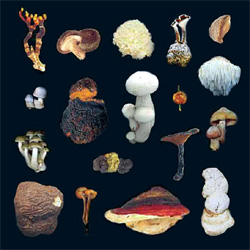
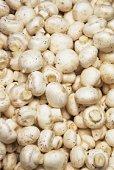
1. Mushrooms contain glycoproteins - the most notable being beta-glucans. These can boost all aspects of the immune system from T-cells to NK cells, and dendritic cells to macrophages. Glycoproteins can reduce inflammation and cancer spread. They have been shown to improve orthodox treatments such as chemotherapy and radiotherapy, and 5-year survival rates.
As long ago as November 2009, the UK's Daily Express carried a page and a half devoted to US research that showed Medicinal Mushrooms (in this case Shiitake) not only boosted the immune system in people trying to fight cancer, but actually increased survival times for 70 per cent of cancer patients when used as a complementary therapy alongside chemotherapy and radiotherapy.
This is not the first time medicinal mushrooms have appeared to help fight cancer; in fact Chinese, Japanese and South East Asian medical practitioners have used Medicinal Mushrooms for 4,000 years.
Medicinal mushrooms have a number of actions; for example, antioxidant and classic phenol properties such as anti-inflammatory benefits affecting heart health, diabetes control, LDL and triglyceride control, nerve damage, stroke recovery, Alzheimer's and Dementia protection, amyloid plaque reduction and more.
A number of naturally occurring substances have already been identified as having high glycoprotein content. Not surprisingly one was medicinal mushrooms.
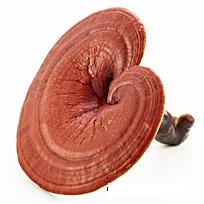 Reishi, Maitake, Cordyceps, Shiitake, Chaga and Lion's Mane mushrooms all contain good levels of beta-glucan polysaccharide. There have been a number of well documented studies on these medicinal mushrooms, which boost all aspects of the immune system, aid communication between immune cells and rogue cells, and help considerably in the anti-cancer fight. One fun story Cancer Research UK reported was that Japanese mushroom pickers have half the cancer rates of the rest of the population. They obviously scrump!
2. Pectin - is a soluble fibre, containing glycoprotein and is the favourite food of the Lactobacillus family. Pectin is found in the cell walls of most plants and fruits - from carrots, tomatoes, sweet potato and green beans to apples, oranges, bananas, peaches, blackberries, raspberries and apricots. The peel of oranges, lemons, grapefruit is particularly high.
3. Brans - slow cooked oatmeal, whole barley, whole brown rice.
4. Arabinogalactins - found in wheat, red wine, coconut, meat, echinacea, corn, turmeric, psyllium, garlic.
5. Unpasteurised Milk, and Whey proteins - of course, unpasteurised cheese and raw milk is full of glycoproteins destined for baby. Totally legal in France and Europe, talk of illness and death is, frankly, deliberate scaremongering. I eat a little raw cheese most days. Not all Whey protein products are 'top drawer'. However, in quality products, many Whey proteins are bioactive glycoproteins - lactoferrin, immunoglobulins G, A and M, and lactoperoxidase are probably the top three (2).
6. Others - Aloe Vera, green ocean algae, fucoidans, seaweeds like Sargassum filipendula.
It's looking like a Rainbow diet!
The interesting factor is the universality of the discovery. All cells seem to positively respond to natural glycoproteins, whether they are human, plants or animals. And even tiny amounts of these sugars - or lack of them - have a profound effects.
One integrated cancer expert we spoke to said that glycoproteins would be more important than all discoveries like vitamin C, B17 and genistein added together!
You should ensure you incorporate the above foods into your diet, for you good health and that of your immune system.
Go to: 8 Medicinal Mushrooms and their benefits
******
References
1. Nature Communications 11, 4017, August 11, 2020; Lucy I Crouch et al; Prominent members of the human gut microbiota express endo-acting O-glycanases to initiate mucin breakdown
2. Int Dairy Journal; Quantitative analysis of Whey Proteins; Rivka L. Valk-Weeber et al; 2020, vol 110

At last - the definitive, research-based book on how to build a diet to help beat cancer. Click here to read about it.
Please be clear: At CANCERactive we do not consider the above compound to be a cure for cancer, despite what the research says or experts doing the research may claim. The above, is an article on the compound from published research and expert opinion in the public domain. At CANCERactive we do not believe that any single compound (drug, vitamin, whatever) is a cure for cancer. We believe that people can significantly increase their personal odds of survival by building an Integrated Programme of treatments. Equally, cancer prevention is best practiced through a width of measures.