An anti-cancer diet and cancer nutrition that would help the average person on Chemotherapy. By Chris Woollams
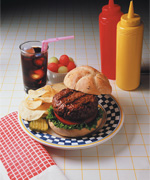
1. A diet for Chemotherapy - the NHS
One of our readers was having chemotherapy and picked up an NHS booklet at the Royal Marsden on ’A Diet for Chemotherapy’. It covered recommendations on what to eat as a cancer diet when undergoing chemotherapy. And she was horror struck.
"I thought it was some sort of April Fool", she wrote in her letter to us.
Small pictures of a cheeseburger, a milkshake and a sticky bun or cake on every page, with recommendations to drink milky sugary tea, consume cows’ dairy, sugar and fats were commonplace. Is this really a cancer diet for cancer patients? Is this cancer nutrition at its best? A diet to beat cancer?
We quizzed the hospital, for whom we have the greatest respect. The reply stated that the sole issue during chemotherapy was to keep up body weight, hence the diet full of calories from fat and sugar. The sole issue?
Only recently in a Times review on cancer, an ’expert’ reiterated this fat- and glucose-rich diet, telling cancer patients - ALL cancer patients - on chemotherapy that calories were good and they should have lots of cows’ dairy and sugary foods to keep their weight up! Yet we are all told regularly in the media that this is actually a ’junk diet’ to be avoided at all costs. What is going on?
The truth is that in 2018 this UK advice is dangerously misleading and most importantly, out of date. In America, cancer centres such as MD Anderson and Memorial Sloan-Kettering talk about ’tailoring’ a nutritious diet to help the patient heal and to fight the cancer better. Moreover, the American Cancer Society talks about an explosion in research that shows a good diet can increase survival times and even keep you cancer free. The National Cancer Institute in America has endorsed this report and also conducted research showing that poor diet helps cancers regrow, while good diet helps stop that regrowth!
Then there is specific research including meta-studies that:-
* Common sugar like glucose and high fructose corn syrup causes, feeds and spreads cancer - SEE HERE
* An intake of common sugar compromises and damages the immune system with 40 minutes.
* Indeed cancer patients with HIGHER BLOOD GLUCOSE levels SURVIVE LESS - they live the shortest times.
* Common sodium salt poisons healthy cells and can reduce their oxygen levels and power. Diet’s rich in magnesium and potassium are helpful.
* Bad fats like trans fats, LDL and triglycerides can severely compromise the liver and the immune system.
* Higher levels of bad fat in the blood stream encourage metastases - SEE HERE
* Cows’ dairy contains a growth hormone (IGF-1) known to encourage cancers to grow and divide.
Why give people this diet which seems to encourage the growth of cancer at the very same time your oncologist is struggling to kill off the cancer?
2. Cachexia
The explanation for the NHS cancer diet booklet came when we found out UK hospital dieticians are so busy that they only see the approximately 7 per cent of cancer patients on chemotherapy - and these are the patients who are in severe trouble. These patients have ’cachexia’, where the chemotherapy is causing severe weight loss and a downward spiral can develop and this can kill. Doctors certainly don’t want their drugs blamed for killing people, do they? It’s a political hot potato, so the dietician aims simply to build you up - calories, fats, sugar - and keep your weight up.
However, we cannot agree that this calorie-laden, fat-rich diet should be recommended for the other 93 per cent of patients on chemotherapy. In fact, publishing a booklet under that title for all patients on chemotherapy, we think, is simply crazy.
3. Read the research - fish oils reduce cachexia risk!
In 2012/13 research covered in Cancer Watch showed that the consumption of fish oils by lung cancer patients on chemotherapy, actually encouraged appetite, improved nutritional status and reduced cachexia risk (British Journal of Nutrition). This seems true for other cancers too. Other Research shows -
* 2008 - 1.5 gm of fish oil a day over a prolonged time corrects weight loss, improves biological function
* 2011 - Fish oil EPA shows improvement in appetite, lean body mass and quality of life
There is also clear research that fish oil is anti-inflammatory (just what cancer patients need), that it actually builds anti-inflammatory gut bacteria levels, and that it works synergistically with Extra Virgin Olive Oil, which is also anti-inflammatory.
4. The Rainbow Diet
All of the above is a clue to what you really need in ’a diet for chemotherapy’.
Carbohydrates
1. You should avoid high glucose, high fructose corn syrup and ’empty’ calorie foods - fizzy soft drinks, alcohol, sugary puddings, bought fruit juice and smoothies, ice cream, cake, milk chocolate, cows’ dairy, biscuits, junk.
2. You should focus on whole foods - whole carbohydrates like whole oats, whole organic brown rice, jacket potato, pulses like lentils, red kidney beans, chickpeas etc.
Fats
3. You should focus on good levels of good fat - Extra Virgin Olive Oil, nuts like walnuts and almonds, seeds like flaxseed, pumpkin, and sunflower; fish and fish oils, avocados. Cook in avocado oil. These good oils should be 70% of your fat consumption.
4. You should restrict saturated fats to reduce LDL in the blood stream - cut meats, dairy, coconut oil, refined fats and oils. These should be less than 30% of your consumption.
Fruit and vegetables
5. You should focus on deep colours with the bias heavily towards vegetables rather than fruits.
Then there are foods like raw ginger that is anti-inflammatory and controls blood sugar, fennel and garlic that reduce yeast levels, carotenoids in apricots, greens and sweet potato that research has shown to limit the return of breast cancer, anthocyanins in beetroot and cherries, anti-oestrogens in pulses and soluble fibre in nuts and seeds to strengthen your immune system.
Go to: Colourful Mediterranean Diet
In our view, the healthy anti-cancer diet when having chemotherapy is the fish oil-rich, extra virgin olive oil-rich, anti-inflammatory, colourful Mediterranean Diet.
We have summarised this clearly in our book The Rainbow Diet, which has guidelines on foods to reduce oestrogen naturally, to cut inflammation, to cut yeasts and rebuild gut bacteria - it even tells you what to buy at the shops and has a points system.
We are pleased to note that this is increasingly the diet being used at top American Hospitals with cancer patients and both chemotherapy and radiotherapy.
Go to: The Rainbow Diet book
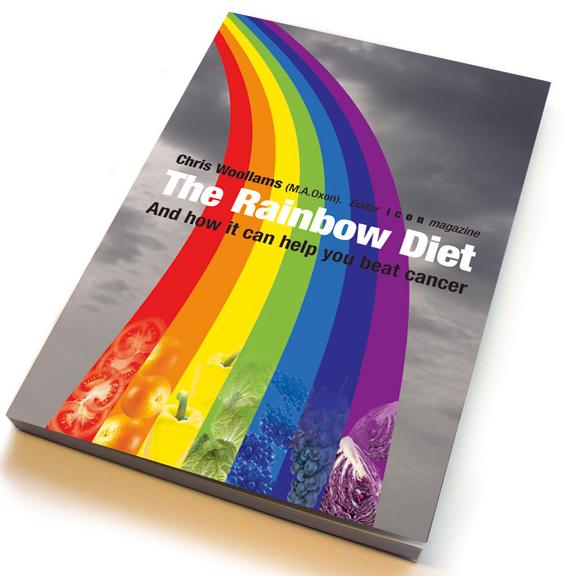
 At last - the definitive, research-based book on how to build a diet to help beat cancer. Click here to read about it.
But you will read a lot about good diets on the Internet. The telling issue is ’Show us your Research!" The Ketogenic Diet? At the moment, is a theory - with a couple of animal studies. Gerson, Budwig, Paleo Diet - show us your research. Do they have any at all?
On this website we have about 80 research studies, encompassing the benefits of the Rainbow Diet ingredients through to studies showing the diet prevents cancer, increases survival and prevents cancer returning. The studies also show effect in other chronic illness from heart disease to Alzheimer’s and diabetes.
No other diet competes with this. Research on the NHS diet helping cancer patients survive longer? Zero.
Come on NHS - if you think your diet helps cancer patients - show us the research!
Go to: The Rainbow Diet Research Centre
The other factor about the Rainbow Diet is that it is flexible. If you have a brain cancer or colorectal, then reduce the carbs and increase the good oil consumption. If you have breast cancer or prostate cancer, reduce the bad fat consumption. If you have a blood or lymph cancer, increase the organic vegetable content and use more curcumin.
5. Weight control, calorie restriction and fasting
There is little doubt that there are studies which, if you add them together, point you at benefits for the following in certain circumstances.
* Weight control - Actually, you should NOT be piling on the pounds. An American Cancer Society 2012 report highlighted how ’weight control’ was an important factor in beating cancer; Northwestern University Medical School have presented research showing that weight control and the deliberate loss of weight by overweight people improves survival times.
* Calorie Restriction - And then there’s research from Chicago Medical School that shows that Calorie Restriction seems to be beneficial for cancer patients having chemotherapy and especially radiotherapy improving both the results and reducing side-effects. All the research studies we quote are in Cancer Watch on the CANCERactive website. For example:
2013 research covered in Cancer Watch suggests that ’Calorie Restriction increases survival times for those on radiotherapy and chemotherapy. Dr Andrew T Turrisi, Editor of The Oncologist stated this when writing on the study: Renato Beserga et al. Nutrition Restriction and Radiation - When less is more.
Calorie Restriction involves eating 15 per cent less calories than you need. This is known to be healthy and increases longevity (War time populations; experiments with rats) and there have been a number of studies on its benefits. But here a lowered calorie diet brings better outcomes with patients on chemo. The exact opposite of what the NHS claim.
* Ketogenic Diet - The University of South Florida have shown that starving the body of glucose completely by using a ’good fat diet’ can return cancer-infected mice to good health. A good fat diet includes eggs, avocado, cold pressed olive oil, flax seed oil and so on. This is called a Ketogenic Diet. Healthy cells can metabolise the ketones for energy, but cancer cells MUST have carbohydrate, especially glucose. So you starve them. (See the Ketogenic diet - CLICK HERE).
Beware though - while low sugar helps in brain cancer and colorectal, a high bad fat will hinder in hormonally driven cancers. Some ’health experts’ suggest you can eat any fat on the Ketogenic Diet. And it is very inflexible - only 2% of your calories from carbohydrate; 8% from protein and a whopping 90% from fat. Most people with cancer just can’t do it.
Most people would prefer the greater flexibility of the Rainbow Diet which can, if necessary be used with Metformin or Berberine to reduce blood sugar levels. Some oncologists even suggest a small statin to reduce bad fat levels and stop a cancer spreading. We favour lycopene from tomatoes with the Rainbow Diet.
* Fasting - You can go even further - Fasting for 2 days before chemo, the day of chemo, and for half a day after, has been shown to produce sirtuins which shut down healthy cells, meaning they do not take on the chemo drugs. Result? Less side-effects, but more chemo drugs available to attack the cancer cells. Result? A more effective chemotherapy.
Go to: Fasting, calorie restriction and cancer
The Ketogenic Diet is really an extreme form of the Rainbow Diet, which is high fat, but emphasises good fats. The Rainbow diet is more flexible and easier to use. Glucose restriction is sometimes provided by Berberine or metformin.
2012 was a watershed year for research into natural compounds, many of which are contained in The Rainbow Diet, with, for example, polyphenols, resveratrol, quercitin, green tea, curcumin and even aspirin, all being shown to stop cancers reforming, growing and metastases in research from Dr. Young S. Kim of the National Cancer Institute. This research showed that bad foods could cause your cancer to regrow, while good foods containing those compounds could stop recurrence and increase survival. Are you reading this NHS Dieticians?
Go to: Foods to eat or avoid if you are on chemotherapy
An American Cancer Society report reviewing complementary therapy research since 2006, the researchers talked of an ’explosion’ of research and ’overwhelming’ evidence that diet, exercise and weight control could improve survival times and even prevent a cancer returning.
Finally, 2017 research from the American Cancer Society has shown that cancer patients who stick most closely to a good diet and exercise programme have 31 per cent less recurrence and 42 per cent less death over a 7 year period.
Diet isn’t all in increasing your personal odds of survival. That’s why we built the ACTIVE8 programme.
Go to: The ACTIVE8 Programme
"If you are already thinking of buying these products you might like to see what Natural Selection has. Please click here."
* * * * * *
In a second article, we asked the views of a dozen expert nutritionists, herbalists and cancer experts -here we present an outline of what they said was a real Diet for Chemotherapy.
Building an effective cancer diet that will HELP your oncologist treat your cancer.
So let’s try and build up to a list of what is important to avoid, and to definitely include:
1. Cancer cells need glucose, lots of it
It can cause cancer, it makes cancer cells grow, it encourages inflammation and it helps metastases
-
Avoid all cakes, sticky buns, chocolate, sugar in tea, fizzy soft drinks, Ribena, biscuits, processed and packaged foods.
2. Cancers need growth hormone, as much as they can find
Scientists have recently been looking at giving breast cancer patients bisphonates, which are bone-strengthening drugs. Why? Because breast cancers attack bones causing the bone to try to defend and strengthen itself by producing growth hormone. The cancer says ’Thank you’ and uses the growth hormone to boost its own growth and division. It is really taking control of the body system’s now. Why would you want to add more growth hormone from cows’ dairy into your body? Avoid all cows’ dairy.
3. Cancers need a blood supply to grow
Scientists also know that tumours need to grow and that demands an increased blood supply. They have been looking at drugs like thalidomide to stop blood vessels forming in cancer tumours. Growth hormones and other factors in your body can be stimulated by the foods you eat but research shows clearly that other foods (like garlic, grape seed extract and curcumin) can slow or even stop this process. Include these ingredients daily.
At last - the definitive, research-based book on how to build a diet to help beat cancer. Click here to read about it.
4. Foods and herbs can help you fight cancer
Go to: 12 foods known to fight cancer
These are not the same for every cancer. For example, prostate cancer -
Go to: 12 natural products to fight prostate cancer
Then there are herbs.
Go to: 20 herbs that fight cancer
Or oestrogen - some cancers are oestrogen driven, like breast ovarian, prostate, testicular, womb, some brain tumours, some lung cancers etc
Go to: Ways to control your oestrogen naturally
Get the picture. There is no one diet that is perfect for all.
Then there are stem cells at the heart of cancers. Work at St Bart’s and the Blizzard Institute in London isolated cancer stem cells from tumours. Chemotherapy may destroy a whole tumour but if one cancer stem cell remains, it can all regrow. Crucially Young S. Kim of the National Cancer Institute in Bethesda, USA has shown that ’eating inappropriate foods and their ingredients may result in the loss of regulatory molecules and promote the aberrant or uncontrolled self-renewal of cancer stem cells. But eating other foods containing specific natural compounds can stop the self-renewal’. So, you can guess the ’inappropriate foods’ for yourself. Avoid all refined foods - refined (white) wheat, bread, pasta, oils, junk food and so on. Don’t put it in your mouth if it is not natural and whole. Consume extra virgin olive oil, plenty of fibrous vegetables and fruit, whole oats ... ...
So why eat bad foods if they can make your cancer regrow? Eat the good ones.
Interestingly, the good foods/natural compounds list included sulphoraphanes, curcumin, piperine, theanine and choline plus vitamins A and D, genistein (which can block oestrogen) and EGCG from green tea. The researchers added the statement that ’all these can be taken as supplements’.
5. Common salt can cause the same oestrogen effects in the cell
A diet high in sodium salt, but low in magnesium and potassium can poison your cells and their power stations and generate the same havoc effects as oestradiol. You need a low salt, high potassium and magnesium diet to counter this effect. The EPIC study has shown that higher magnesium intake means less cancer. The WHO has stated that cutting salt consumption means less cancer. Common table salt and also about 95 per cent of ’Sea Salt’ is just refined sodium chloride - avoid at all costs and if you have to use salt use unrefined Dead Sea Salt or Himalayan Salt. Avoid all processed, canned and packaged foods, dried meats, sausages, and Chinese food (MSG is high sodium). Why would you want a salty diet if you have cancer?
6. Your immune system can kick out a cancer
We know that a high glucose diet depresses the immune system, and one high in animal fats can block liver and lymph systems also depressing your immune response.
Conversely a number of natural compounds including beta glucan, grape seed extract, pine bark extract, vitamin E and curcumin, plus herbs such as astragalus, cat’s claw and echinacea can equally boost your white immune cell levels. Recent research shows that this is still not enough without the presence of vitamin D to activate the immune attacker T-cells, and vitamin K (from ’greens’) to enhance the uptake.
Then there’s the finding that people with the highest consumption of soluble fibre (oats, pulses, nuts and seeds) have the strongest immune systems.
Why? They are the favourite foods of your good gut bacteria. And your immune system is produced largely in response to your gut bacteria. We know that the drugs flatten both the immune system and the gut bacteria. Ironically, several studies (Chicago Medical School, Lille Medical Institute) have shown that many newer drugs especially immunotherapy drugs, need gut bacteria to help them fully work. Taking a daily probiotic is a good idea, as are yeast killers (oregano oil, caprylic acid, artemisinin) to stop the drugs causing debilitating yeast excesses.
So, check out how to Heal your Gut here?
7. Chemotherapy is changing

Chemotherapy drugs over the last fifty years are like unguided missiles

Scientists are looking at a whole range of immune boosting drugs and treatments like dendritic cell vaccines, immunotherapy drugs like PD-1 or CAR-T to help boost your immune system to fight off the cancer. The new breed of drugs (Biologics, monoclonal antibodies, immunotherapy, even hormone treatments like Zolodex) are problem-specific, tackling issues such as missing proteins or reducing oestrogen levels, growth hormone effects or immune blockages. They make ordinary chemotherapy drugs look like unguided missiles. Research is quite clear that these new drugs can be helped in their tasks by certain natural compounds, antioxidants, herbs, probiotics and a tailored diet.
MD Anderson has shown that vitamin E and vitamin C can help bladder cancer drugs; vitamin E can help tamoxifen’s action (you need less of the drug) as can melatonin; whereas eating grapefruit can counter certain cancer drugs and should be avoided. What you eat can make a big difference to your survival as the NCI researchers in Bethesda found. A junk diet of sugar and saturated fats will only give you a junk body and encourage the regrowth of cancer. Do you really want to have a junk body when you are fighting to beat cancer?
8. Our knowledge is increasing
We also know that there are many unique factors to a cancer cell. For example it has more receptor sites than a normal cell for vitamin D. And since 2010 major research studies have shown that vitamin D seems capable of normalising/correcting and even killing a cancer cell. Vitamin D, which works more like a hormone than a vitamin, may eventually be available in a concentrated form as a drug, but why wait? You can join the sun worshipers for 45 minutes a day, or supplement. Vitamin K has been found now in several research studies to help vitamin D’s action. You can get your vitamin K from one good helping of greens per day but only if you have good beneficial bacteria levels in your gut (see below). These good bacteria are essential to your good health; they love whole grains, whole foods and natural fibre, they hate salt, alcohol, antibiotics, chlorine and especially junk foods like cheeseburgers, refined grains and glucose (which feed their enemies).
9. You can have your personal programme tailored to you
There’s a lot of information - not just diet and supplements, but oxygen, fatty liver, gut bacteria, controlling inflammation. The web contains so much information - some excellent, some awful.
You can have Chris Woollams help you.
Go here to: ’Read what patients say about having a ’personal prescription’.
10. Different folks, different strokes
When we covered research on common sugar in Cancer Watch we received several letters from irate nurses saying, basically, that we were talking rubbish because sugar is good for you.
Let’s get a few facts straight. Firstly, it’s not our research. We just tell you what Harvard, UCLA, MD Anderson, whoever, have found in THEIR research and clinical trials. Go argue with them! If they repeatedly say that people with the highest levels of common sugar in their blood streams survive less, then that’s good enough for us!
It seems to us that donations - for example from Coca Cola to the sceptic charity Sense about Science, set out to encourage the confusion. Why else make a donation?
Cheeseburgers; milky/sugary tea; sticky buns; milk shakes??!! It’s a junk diet.
The World Health Organisation is quite clear that up to 70 per cent of all cancers can be attributed to poor diet and are preventable. If you had breast cancer in one breast and are now taking drugs, surely part of what you are doing is trying to PREVENT this cancer reappearing elsewhere?
Consuming milk shakes, cheeseburgers, milky/sugary tea, ice cream, supposedly ’healthy’ drinks like Ribena and Lucozade, sticky buns, chocolate and cake? You are pouring petrol on the fire!!! This is not a diet for chemotherapy it is positively dangerous. A good diet should prevent cachexia AND help fight the cancer. We are not alone in this view. Several major hospitals in the USA now talk about using a nourishing and nutritious diet with adequate minerals and vitamins a rainbow of colours and whole foods.
Eat to Beat Cancer
In Chris Woollams’ book for CANCERactive, The Rainbow Diet and how it can help you beat cancer, he tells you what foods have been shown in research to be Protective and Corrective. The fact is the pigment in many foods is the bioactive natural compound that has strong anti-cancer properties. Across the week you should eat a rainbow of colours: So base your diet around foods like -
Fresh garlic, leeks, onions, spring onions, radishes - for example, garlic is known to contain a number of anti-cancer agents and is believed to help stop cancer spreading and blood supplies forming to new tumours.
Pulses - for thousands of years we have eaten broad beans, peas and pulses providing phytoestrogens (plant oestrogens that are far, far weaker than human oestrogens) to protect us especially against the spread of hormonally driven cancers.
Glycoproteins and polysaccharides - Four Nobel Prizes for medicine in the last dozen years have been won for discoveries on these natural compounds which help cells communicate -good for your immune system’s ability to see friends and foes. Foods include aloe vera, echinacea, turmeric, pectins (e.g. apples and pears), arabinogalactans (e.g. in oats, psyllium, coconut, tomatoes, carrots, brown rice). Even red wine and mother’s milk contain these important protective factors that encourage better messaging between cells. In the US they are now called "Super carbs" or monosaccharides but are actually neither. Probably the best studied are Medicinal Mushrooms like Reishi, Maitake, Cordyceps which are beta-glucan polysaccharides. (see below).
Dark Red foods - like beetroot, dark plums, aubergines, red grapes, blueberries etc which provide anthocyanins, known to kill cancer cells, and/or polyphenols such as resveratrol and quercitin which both have anti-cancer effects.
Bright colours - for example, red and yellow peppers, peaches, apricots, watermelon, for carotenoids, known to restrict cancers like breast cancer.
Greens - Kale, spinach, broccoli, cabbage for vitamin K, phytoestrogens and indole 3 carbinol.
Sprouting seeds - for sulphoraphanes, which have strong anti-cancer activity.
Nuts and seeds try a breakfast of a little organic muesli, boosted by organic pumpkin and sunflower seeds and crushed flaxseed/linseeds. Great for B vitamins like folic acid and biotin to help protect DNA, cellular oxygenation and detoxifying lignans.
Bitter foods - like watercress, gooseberries, cranberries, blackberries, wild strawberries. Or almonds, cashew nuts, millet, buckwheat and apricot kernels all of which contain fibre and a variety of natural compounds (yes, including B-17, which people like Dr Contreras at the Oasis of Hope calls ’nature’s chemotherapy’). There are also Salvestrols - Professor Potter called them Nature’s Killers too.
Notable additions - Green tea, olive oil, fennel, oregano, turmeric/curcumin to boost your immune system and kill yeasts. Do you need a parasite killer? What about pathogens?
Switch out of cows’ dairy - to a little goats’ cheese, soya and rice milk. Swap red meat for game and oily fish (although research shows eating oily fish comes second to taking a supplement of fish oils everyday).
Eat more mushrooms, apples, organic brown rice, Manuka Honey (grade 12) and onions. We could go on. There is research on everything from the benefits of quercitin against cancer to the ability of medicinal mushrooms to cut oestrogen and boost the immune system. It is all in The Rainbow Diet and how it can help you beat cancer. Importantly, avoid fried food or burning on the grill and eat more raw foods. Avoid beers and spirits, although the occasional red wine seems (from research, you understand!) to help.
Read about the Rainbow Diet Now!
Diet alone won’t suffice!
Your cancer is as individual as you are, so your treatment package needs to be tailored specifically to you and your cancer. You might like to look at the bigger picture - we have created the CANCER ACTIVE8 Programme to help you build an integrative programme that increases your personal odds of survival.
Go to: The ACTIVE8 Programme
***********************************************************
People who read this article, also read:
Acid Bodies and cancer - Click THIS LINK.
Beneficial Bacteria - Click THIS LINK.
Vitamin D - Click THIS LINK
Hydrazine Sulphate - Click THIS LINK.
A Clean, efficient liver - Click THIS LINK.
A Diet for Chemotherapy - Various ’expert’ view - Click THIS LINK